

OECD Test Guideline 415: What is a Reproductive Toxicity Study on a Generation?
Assessing the effects of chemicals or newly developed products on reproductive capacity is essential for human and environmental health. The OECD Test Guideline 415 – One-Generation Study on Reproductive Toxicity, which is applied in this context, is a standardised test procedure that can be used to scientifically determine possible toxic effects on the reproductive system.
Purpose of the test
This test is performed on both sexes of a chemical substance in order to
- the health of the reproductive organs,
- reproductive capacity (fertility, mating success, etc.)
- as well as the effects on the health and development of the offspring.
In this way, long-term risks to the reproduction of humans and other living beings can be determined in advance.
How is the OECD 415 test performed?
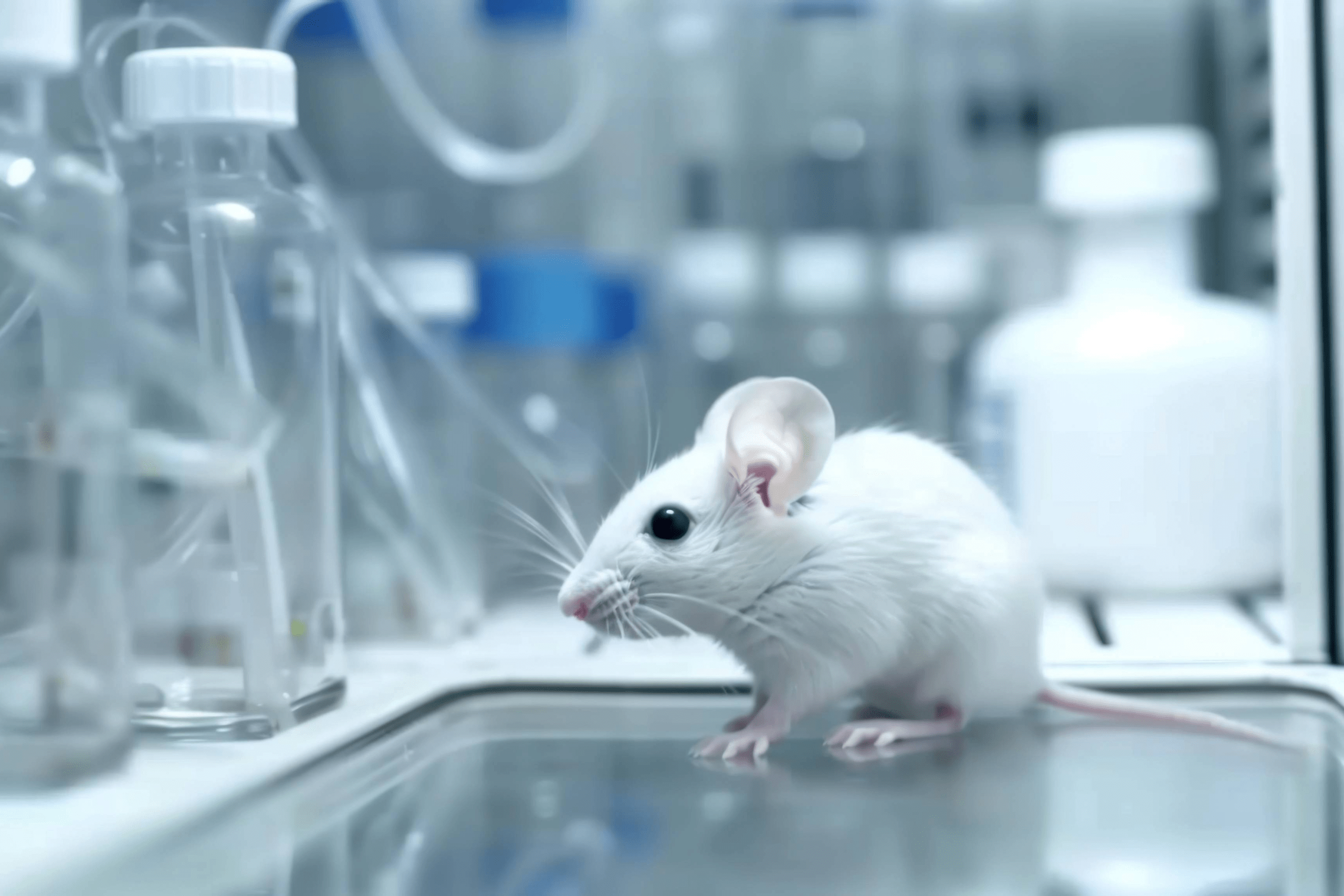
The one-generation reproductive toxicity study is usually conducted on mammalian models such as rats. The general steps of the test are as follows:
- Preparation: The test substance is administered to the test animals over a certain period of time before mating.
- Mating and pregnancy: Male and female animals are mated, and throughout the process, both the parents and the developing young animals are observed.
- Birth and aftercare: After birth, the survival rate, growth and development parameters, and the health of the young animals are examined.
- Result analysis: The data obtained will be evaluated with regard to reproductive performance, the health of the young animals and the effects on the parent organisms.
Why is a reproductive toxicity study on a generation important?
Reproductive health is crucial not only for the health of the individual, but also for the sustainability of society as a whole. In particular, this test is indispensable for product development and safety assessment in the following areas:
- Pharmaceutical Industry
- Plant protection products and biocidal products
- Chemical production
- Development of cosmetic products
- Environmental compatibility tests
In particular, in the case of substances that pose a risk to the environment or to humans, the identification of possible harmful effects on the reproductive system may be required by law.
Reliable and scientific approach with Nanolab
As a Nanolab laboratory, we conduct the OECD 415 studies on reproductive toxicity of one generation in accordance with international standards and current scientific methods. With our team of experts and our state-of-the-art laboratory infrastructure, we determine in detail the potential risks of your products for reproductive health.