

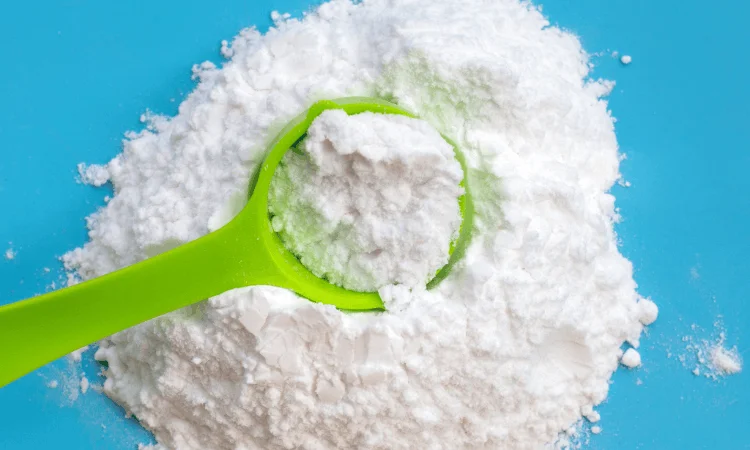
Determining Moisture Content and Dry Matter in Detergents and Soaps: The Right Method for Quality Control
The feel of soap in your hand, the flow behavior of a powdered detergent, or the viscosity of a liquid cleaner—all of these properties have one invisible yet crucial parameter: moisture content. In detergents and soaps, water is both an indispensable component of the formulation and a variable in the manufacturing process that must be controlled. Too much moisture leads to clumping in powdered products and to a loss of hardness and microbial degradation in soaps, while too little moisture impairs processability and the consumer experience. Therefore, moisture and dry matter determination is a cornerstone of routine quality control in the cleaning products industry.
Dry matter represents the sum of all anhydrous components of the product and is typically calculated from the moisture content. However, there is one crucial detail to consider: Depending on the method used, the measured “moisture content” may include not only water but also volatile organic compounds. Choosing the right method is therefore crucial for the reliability and interpretability of the results.
Moisture and Dry Matter: Definitions and Relationship
Technically speaking, moisture is the total amount of water and volatile substances that can be removed from the product under certain conditions. Dry matter, on the other hand, is the solid residue that remains after this volatile fraction has been removed. The relationship between these two values can be expressed simply as follows:
Dry matter (%) = 100 − moisture (%)
However, this formula applies only if the measured moisture value actually represents water alone. The oven method detects all substances that evaporate at the test temperature (alcohols, solvents, and some volatile active ingredients). Therefore, for liquid detergents with a high alcohol or solvent content, the “moisture value” may be higher than the actual water content. For such products, water-specific methods such as azeotropic distillation or Karl Fischer titration should be preferred.
Key Factors in Selecting a Method
The method used to determine moisture content in detergents and soaps is selected based on the product's physical form, matrix composition, and the purpose of the analysis. Three basic approaches are primarily used:
1. Oven Method (ISO 672 and ASTM D4574)
This is the most commonly used reference method for soaps and detergents. The sample is dried in an oven set to 103 ± 2 °C until it reaches a constant weight, and the weight loss is calculated as moisture. ISO 672 establishes the framework for this method for soaps, while ASTM D4574 describes the air-oven method for soap products containing synthetic detergents.
Please note: ASTM D4574 explicitly states that misleading results may occur with products containing sodium silicate or more than 1% glycerin. Alternative methods should be considered for such matrices.
2. Azeotropic distillation (ISO 4318)
This is a water-specific method. The sample is heated with a solvent that is immiscible with water (toluene or xylene); the water forms an azeotropic mixture with the solvent, evaporates, and condenses in the condenser. The volume of water collected is measured to determine the content. ISO 4318 specifies that this method is suitable for powder, paste, and solution formulations containing more than 5% water.
The biggest advantage of this method is that it is not affected by volatile organic compounds and directly measures the amount of water. It provides more reliable results than the oven method, especially when testing liquid detergents that contain solvents or alcohol.
3. Thermogravimetry (TGA) and Rapid Methods
Thermogravimetric analysis measures the change in weight of a sample under a controlled temperature program. It is significantly faster than the oven method (taking only a few minutes) and requires only a small sample size. However, TGA is not specific to water; volatile components are also detected. It can be used for rapid screening in ongoing production control; however, the oven or distillation methods should be preferred as reference methods.
Comparison of Methods for Determining Moisture Content
The following table summarizes the key characteristics of the methods used to determine moisture content and dry matter in detergents and soaps:
| Method | Reference Standard | Measured parameter | Suitable Product Types | restrictions |
|---|---|---|---|---|
| Oven Method | ISO 672, ASTM D4574 | Moisture + Volatile Compounds | Bar soap, laundry detergent powder | Also detects volatile organic compounds; may give misleading results with products containing silicates or glycerin |
| Azeotropic Distillation | ISO 4318 | Just water | Liquid detergent, paste, powder | Longer duration; special glassware required |
| Thermogravimetry (TGA) | — | Moisture + Volatile Compounds | All forms (rapid screening) | No reference method; not specific to water |
Interpreting the Results: Why Dry Weight Is Important
The dry matter value is a practical indicator of the product’s “active ingredient density.” The dry matter content of a powdered detergent reflects the total amount of surfactants, builders, and fillers in the formulation. For liquid products, the dry matter indicates the concentration of dissolved solids (surfactants, salts, polymers).
Controlling moisture levels in the production process is also a means of controlling costs. Excess water increases transportation costs and shortens the product's shelf life. Therefore, manufacturers maintain tight specification ranges to ensure both quality and efficiency.
Reliable Moisture and Dry Matter Analysis with Nano-Test
In the detergent industry, quality control begins with the right methods and proper reporting. Nano-Test offers manufacturers of detergents and soaps services for determining moisture content and dry matter in GLP-compliant laboratories.
Nano-Test Specifications
Nano-Test performs analyses to determine moisture content and dry matter in detergents and soaps in accordance with ISO 672, ASTM D4574, and ISO 4318. Our scope of services includes:
- Oven method: Determination of moisture and volatile matter by drying to constant weight in accordance with ISO 672 and ASTM D4574.
- Azeotropic distillation: A water-specific distillation method in accordance with ISO 4318 for reliable results.
- Dry Matter Calculation: Calculation and reporting of dry matter content based on moisture data.
- Methodology Consulting: Selection of the most suitable method for your product matrix (furnace, distillation, or both).
- Method Validation: Development and verification of product-specific procedures.
All analyses are provided as GLP-compliant reports with an audit trail and data integrity (ALCOA+ principles). The results are reported with a clear description of the method and standard used.
Advantages of Nano-Test:
- Dual methodological expertise: Both the furnace method and azeotropic distillation in the same laboratory.
- Choosing the Right Method: We recommend using the most appropriate method for your product matrix to avoid misleading results.
- Accredited Infrastructure: ISO/IEC 17025 accreditation for internationally recognized reports.
- Quick turnaround: Results for standard moisture analyses within 2–3 business days.
- Wide range of products: bar soap, liquid soap, powdered laundry detergent, liquid laundry detergent, and surface cleaners.
Determining the moisture and dry matter content in detergents and soaps is an analysis that appears simple but, if performed incorrectly, can directly affect product quality and production efficiency. The oven method offers a practical solution for routine testing, while azeotropic distillation provides more reliable results for volatile components. The method used must always be reported to ensure that the results are interpretable and comparable.
With the right choice of methods, accredited infrastructure, and GLP-compliant reporting, Nano-Test meets the requirements of detergent and soap manufacturers for moisture and dry matter determination. Partner with Nano-Test to document the quality of your products and optimize your production process.