

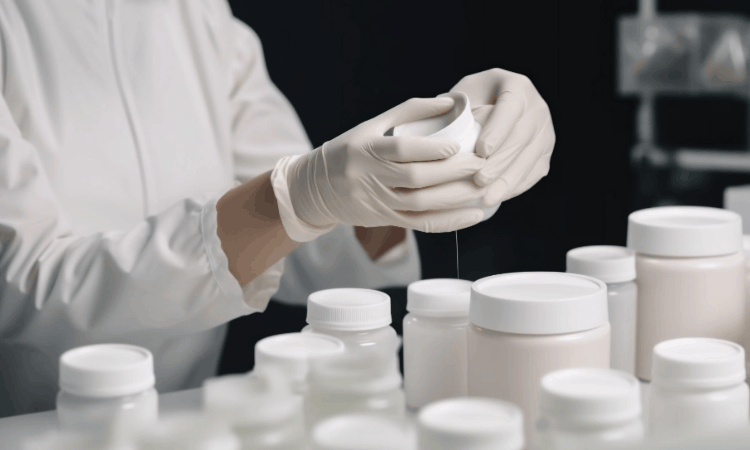
Testing the Efficacy of Preservatives in Cosmetic Products (Preservative Efficacy Test): Guidelines in Accordance with ISO 11930
Due to their content of water, oils, proteins, and other nutrients, cosmetic products provide an extremely favorable breeding ground for the growth of microorganisms. If a cream, lotion, or shampoo is exposed to contamination by bacteria, yeasts, and molds at any point between manufacturing and reaching the consumer, this can lead to product spoilage, the development of unpleasant odors, and skin infections. To eliminate this risk, the efficacy of the preservatives added to the formulations must be scientifically proven. This is where the Preservative Efficacy Test (PET), also known as the challenge test, comes into play.
The preservative efficacy test evaluates how resistant a cosmetic product’s preservative system is to microbial contamination that may occur during manufacturing or during consumer use. This test is conducted in accordance with the internationally recognized standard ISO 11930 and provides important data for the Safety Assessment Report (SAR) of cosmetic products.
What is the preservative efficacy test, and why is it necessary?
The test for protective efficacy is based on the principle that the product is specifically inoculated with certain strains of microorganisms, and the decrease in the number of microorganisms is monitored at specific intervals. The main objective of the test is to demonstrate that the product remains microbiologically safe throughout its shelf life and during consumer use.
The requirements for the preservative efficacy test can be summarized as follows:
- Legal Requirement: The EU Cosmetics Regulation (EC) No. 1223/2009 and national laws require that products be microbiologically safe.
- Product Safety: A product with an inadequate preservation system poses a risk of infection to consumers.
- Formulation Optimization: The test results make it possible to optimize the concentration and combination of preservatives.
- Determining Shelf Life: The effectiveness of preservatives is directly related to the product’s shelf life and the “period after opening” (PAO).
- Compatibility with packaging: Different types of packaging (airtight pump, jar, tube) affect the risk of contamination.
ISO 11930 Standard and Test Principle
ISO 11930 is an internationally recognized standard for evaluating the antimicrobial efficacy of cosmetic products. This standard specifies how the test is to be conducted, which strains of microorganisms are to be used, what inoculum concentration is to be applied, and which acceptance criteria apply.
Test Principle
The test consists of the following steps:
- Sample preparation: The product is transferred to suitable containers under sterile conditions.
- Inoculation: Each microorganism strain is added separately to the product sample (typically at a concentration of 10⁵–10⁶ CFU/g).
- Incubation: The inoculated samples are incubated at a specified temperature (usually 20–25 °C).
- Sampling: Samples are collected at specific intervals (0, 7, 14, 28 days).
- Counting: The number of living microorganisms (log decrease) is determined at each time point.
- Evaluation: The results are classified into categories A, B, or C according to the acceptance criteria specified in ISO 11930.
Microorganism Strains Used
ISO 11930 specifies the use of the following standard strains:
- Bacteria: Staphylococcus aureus (ATCC 6538), Escherichia coli (ATCC 8739), Pseudomonas aeruginosa (ATCC 9027)
- Yeasts: Candida albicans (ATCC 10231)
- Molds: Aspergillus brasiliensis (ATCC 16404)
In some cases, depending on the intended use of the product, additional strains (e.g., Burkholderia cepacia) may also be tested.
ISO 11930 Acceptance Criteria: Categories A, B, and C
ISO 11930 classifies test results into three categories. Category A represents the highest preservative efficacy, while Category C represents the lowest efficacy.
| Category | Bacteria (log reduction) | Yeasts and molds (log reduction) | Rating |
|---|---|---|---|
| Category A | Day 7: ≥ 3 log Day 14: ≥ 3 log Day 28: ≥ 3 log + no increase | Day 7: ≥ 2 log Day 14: ≥ 2 log Day 28: ≥ 2 log + no increase | High preservative effectiveness, safe |
| Category B | Day 14: ≥ 3 log Day 28: ≥ 3 log + no increase | Day 14: ≥ 1 log Day 28: ≥ 1 log + no increase | Acceptable level of protection |
| Category C | Day 14: ≥ 2 log Day 28: ≥ 2 log + no increase | Day 14: ≥ 1 log Day 28: ≥ 1 log + no increase | Low efficacy; risk assessment required |
USP <51> und andere Normen
Zusätzlich zu ISO 11930 können in bestimmten Fällen auch Standards wie USP <51> (Test der antimikrobiellen Wirksamkeit gemäß der US-Arzneibuch) oder EP 5.1.3 (Europäisches Arzneibuch) herangezogen werden. USP <51> wurde speziell für pharmazeutische Produkte entwickelt und gilt auch für Kosmetikprodukte als Referenz.
Die wesentlichen Unterschiede zwischen USP <51> und ISO 11930:
- Annahmekriterien: USP <51> legt unterschiedliche Log-Abnahme-Kriterien für Bakterien und Pilze fest.
- Kategorien: USP <51> klassifiziert Produkte in die Kategorien 1, 2 und 3.
- Anwendungsbereich: Während USP <51> vor allem auf pharmazeutische Produkte ausgerichtet ist, gilt ISO 11930 speziell für Kosmetika.
Factors That Affect Test Results
The results of preservative efficacy tests can be influenced by various factors. These factors must be taken into account when designing the test:
- Formulation Matrix: Water content, pH, the oil phase, and emulsifiers influence the effectiveness of the preservative.
- Type of packaging: Different types of packaging, such as airtight pump bottles, jars, or tubes, affect the risk of contamination.
- Concentration of the preservative: If the concentration is too low, the test will fail.
- pH: Some preservatives (e.g., phenoxyethanol) are more effective within certain pH ranges.
- Inoculum concentration: The amount of inoculum determines the difficulty level of the test.
- Incubation temperature: The growth of microorganisms depends on temperature.
Accredited Services for Testing the Efficacy of Preservatives Using Nano-Test
The microbiological safety of your cosmetic products and the effectiveness of your preservative system are crucial to both consumer health and your brand’s reputation. With its comprehensive services for testing the effectiveness of preservatives in ISO/IEC 17025-accredited laboratories, Nano-Test is a reliable partner to the cosmetics industry.
Description of Nano-Test Services
Nano-Test bietet für Kosmetikprodukte Tests zur Wirksamkeit von Konservierungsmitteln (Preservative Efficacy Test / Challenge Test) an. Unsere Analysen werden in voller Übereinstimmung mit den Normen ISO 11930 und USP <51> durchgeführt.
Our Service Portfolio:
- ISO 11930 Challenge Test: Evaluation according to categories A, B, and C; measurement of log decay at 0, 7, 14, and 28 days.
- USP <51>-konformer Test: Alternativer Standard für pharmazeutische und kosmetische Produkte.
- Inoculum Preparation and Validation: Preparation of fresh cultures of standard strains (ATCC) and verification of concentration.
- Neutralization Validation: Validation of the neutralization and dilution efficacy specific to your product matrix.
- Specific strain testing: Testing of additional microorganism strains depending on the product's intended use.
- Reporting: The results are presented using log-normalized values, categorization, and graphical analyses.
All of our analyses are presented in the form of reports that have been audited and whose data integrity (in accordance with the ALCOA+ principles) is guaranteed. Our goal is to ensure the acceptance of your products in global markets while also guaranteeing the highest level of consumer safety.
Advantages of Nano-Test's protective efficacy test:
- Accredited Infrastructure: Internationally recognized test reports with ISO/IEC 17025 accreditation.
- Normkonformität: Vollständige Konformität mit den Normen ISO 11930, USP <51> und EP 5.1.3.
- Fast results: Reporting within 5–7 business days following a 28-day incubation period for standard challenge tests.
- Expert Team: A team with experience in the fields of microbiology and cosmetics law.
- A one-stop solution: microbial count, pathogen detection, and challenge tests—all under one roof.
Testing the effectiveness of the preservative system in cosmetic products is not only a legal requirement but also an indispensable quality assurance tool for protecting consumer safety and brand reputation. Challenge tests conducted in accordance with ISO 11930 standards scientifically demonstrate the efficacy of your product’s preservative system and ensure that it is recognized in international markets.
With its accredited laboratory infrastructure, team of experienced microbiologists, and in-depth knowledge of current standards, Nano-Test fully meets the requirements of cosmetics manufacturers for preservative efficacy testing. Partner with Nano-Test to enhance the safety of your products and accelerate their time to market.