

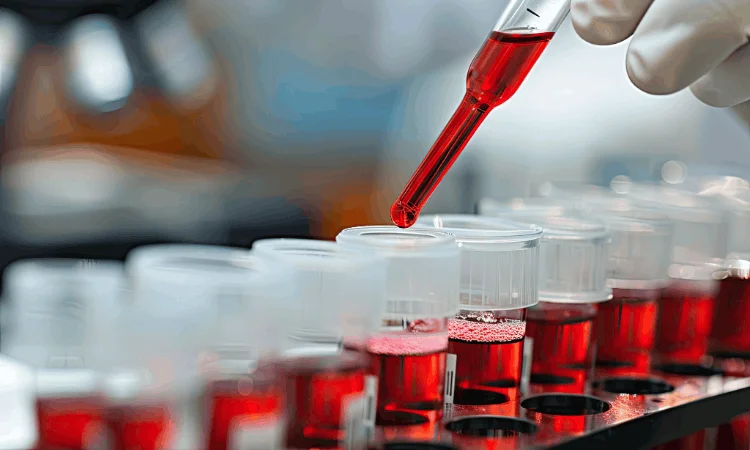
Hemolysis test in medical devices - assessment of hemocompatibility according to EN ISO 10993-4
Medical devices that come into contact with blood include a wide range of products, including blood bags, infusion sets, catheters, stents, heart-lung machine cycles, dialyzers and artificial blood vessels. The interaction of these products with blood can lead to the decay of red blood cells (erythrocytes). This phenomenon is called hemolysis and is characterized by the release of free hemoglobin into plasma. Hemolysis can lead to anemia, jaundice, kidney damage and even life-threatening complications in the patient. Therefore, the hemolysis test - EN ISO 10993-4 is an indispensable component of the biocompatibility assessment of medical devices that come into contact with blood.
EN ISO 10993-4 is the internationally recognized standard for the hemocompatibility assessment of medical devices. This standard defines test categories, methods and acceptance criteria for assessing the effects of products that come into contact with blood on blood components. The hemolysis test is one of the most frequently conducted tests under this standard.
What is hemolysis and why is it tested?
Hemolysis is the release of hemoglobin from the erythrocytes (red blood cells) as a result of a disorder of membrane integrity. Under in vivo conditions, hemolysis can be caused by mechanical trauma, osmotic stress, chemical substances, immunological reactions or microbial infections.
With regard to medical devices, the risk of hemolysis in particular arises from the following factors:
- Surface properties: The roughness, chemical composition and coatings of the device surface can damage the erythrocyte membrane.
- Mechanical Influences: Pumps, continuous blood movement circuits and narrow lumen catheters can exert mechanical stress on the cells.
- Chemical release: Plasticizers, monomer residues or solvents released by the device can have a hemolytic effect.
- Osmotic imbalance: The solutions or surface properties contained in the device can create an osmotic gradient.
The hemolysis test quantitatively determines the extent to which the device exerts a destructive effect on the erythrocytes on contact with blood. The hemolysis percentage determined from the test result indicates whether the device is within the limits acceptable for safe use.
Hemolysis test procedures under EN ISO 10993-4
EN ISO 10993-4 offers various test methods for assessing hemolysis. The choice of method depends on the purpose of the device, the duration of contact with blood and the physical form of the device.
1. In vitro hemolysis test (direct contact method)
This is the most used method. The device or a sample taken from the device is incubated with fresh human or animal blood for a certain period of time (usually 4 hours). After incubation, the amount of free hemoglobin in the plasma is measured spectrophotometrically.
The test is carried out with three parallel samples:
- Test sample: Blood that has been contacted with the device.
- Negative Control: Blood only without device (spontaneous hemolysis).
- Positive control: Complete hemolysis with distilled water or a suitable hemolytic agent.
The hemolysis percentage is calculated using the following formula:
Hemolysis (%) = [(test sample absorption − negative control absorption) / (positive control absorption − negative control absorption)] × 100
2. In vitro hemolysis test (extract method)
In cases where direct contact of the device with blood is not suitable, extracts produced by the device are used, which have been produced in accordance with ISO 10993-12. The extract is mixed with the blood sample, incubated and the hemolysis rate determined.
3. In vivo hemolysis assessment
In certain special cases (e.g. implantable devices or devices that require long-term contact with blood) an in-vivo hemolysis assessment can be performed on animal models. This method shows the effect of the product under real physiological conditions.
Comparison of hemolysis test procedures
The following table summarizes the hemolysis test methods used in EN ISO 10993-4:
| Test procedure | Principle | Suitable device types | Evaluation criterion | Advantages |
|---|---|---|---|---|
| In vitro (direct contact) | The product is incubated with fresh blood; The hemoglobin in the plasma is measured. | Catheters, Blood Bags, Infusion Sets, Stents | Hemolysis rate ≤ 5% (acceptable) | Fast, repeatable, officially recognized |
| In vitro (extract) | The device extract is incubated with blood; Hemolysis is measured. | Devices where direct contact is not suitable | Hemolysis Rate ≤ 5% | Standardized Extract Preparation |
| In vivo | In the animal model, the device is brought into contact with blood; Hemolysis is observed. | Implantable devices, long-term contact | Physiological Assessment | Real Physiological Conditions |
Admission criteria and interpretation of the results
The results of hemolysis tests according to EN ISO 10993-4 are usually evaluated using the following criteria:
- Hemolysis Rate ≤ 5%: The product exhibits acceptable hemolysis (safely) on contact with blood.
- Hemolysis Rate > 5%: The product has hemolytic potential; An additional assessment or change in the wording is required.
However, this threshold may vary depending on the purpose of the product and the duration of contact. For example, for products that require prolonged contact with blood, stricter criteria may apply. The results should be evaluated taking into account the clinical application conditions of the product and the data from the specialist literature.
GLP compliant hemolysis test services from Nano-Test
The hemocompatibility assessment of medical devices that come into contact with blood is only possible by selecting the right test method and presenting the results in an acceptable format for the approval authorities. Nano-Test is your reliable partner in this process with its GLP-compliant hemolysis tests in accordance with EN ISO 10993-4.
Nano-Test – Performance Description
Nano-Test offers hemolysis test services for medical devices in accordance with EN ISO 10993-4. In our laboratories accredited to GLP (Good Laboratory Practice) and ISO/IEC 17025, In vitro hemolysis tests (direct contact and extraction procedures) and In vivo hemolysis reviews performed.
Our service process:
- Sample preparation: Product extraction according to ISO 10993-12 and preparation of test samples.
- Blood Sourcing: Procurement and use of fresh human or animal blood under standardized conditions.
- Incubation: Incubation at fixed duration and temperature (usually 4 hours at 37°C).
- Spectral photometric measurement: Measurement of the absorption of free hemoglobin in plasma at 540 nm.
- Calculation and evaluation: Calculation of the hemolysis percentage and its assessment based on the acceptance criteria.
- Report: GLP-compliant reports with inspection approval that can be used for MDR and FDA-510(K) applications.
All of our studies are carried out to ensure data integrity (ALCOA+ principles).
Advantages of Nano Test Hemolysis Test:
- GLP Certified Infrastructure: All investigations are carried out in accordance with GLP principles and Alcoa+ requirements.
- Standard conformity: Complete conformity with EN ISO 10993-4, ASTM F756 and the relevant standards.
- Competence in both methods: Both direct and extraction methods under one roof.
- Quick results: Reporting on standard hemolysis tests within 5-7 working days.
- Specialist staff: An experienced team in the fields of hemocompatibility and biocompatibility.
- Compliance with legal regulations: Comprehensive support in the preparation of the technical documents for MDR and FDA-510(K) applications.
Hemolysis, caused by blood-contacting medical devices, poses a serious risk that directly jeopardizes patient safety. The hemolysis test - EN ISO 10993-4 - is a crucial step to scientifically demonstrate the effect of your product on erythrocytes. The selection of the right test method, the implementation under standardized conditions and the GLP-compliant reporting of the results are prerequisites for a smooth running of the official approval process.
With its accredited laboratory infrastructure, its specialist staff and GLP-compliant processes, Nano-Test comprehensively meets the requirements of medical device manufacturers for hemolysis tests. Collaborate with Nano Test to increase the safety of your product and speed up market access.